
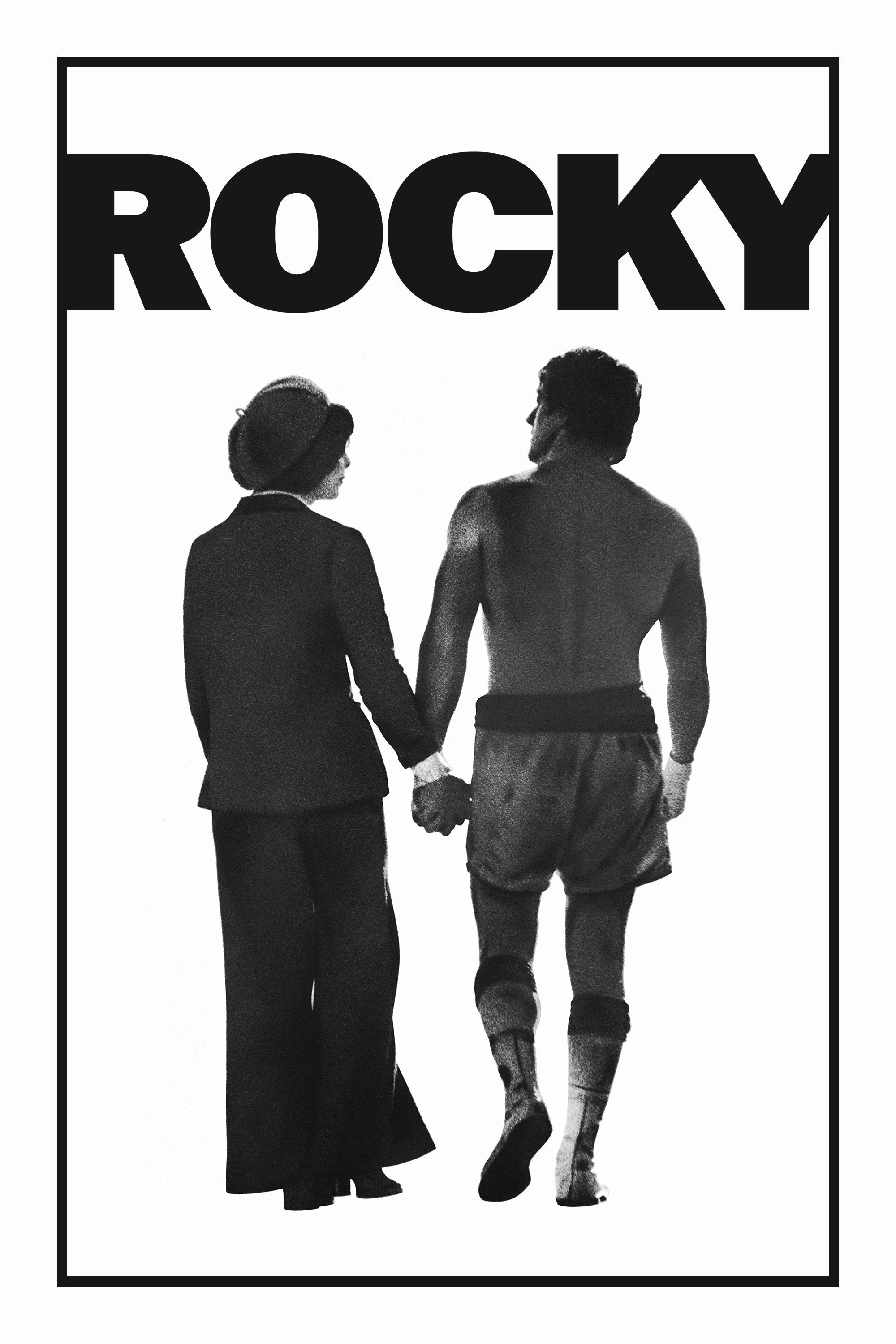
John G. Avildsen's 1976 boxing drama follows Rocky Balboa, a small-time Philadelphia fighter handed a title shot as a publicity stunt, and shows how someone written off by others decides what winning will mean and trains to go the distance.
How It Captures Spirit, Skill & Strategy
Rocky is a decent man drifting through work he is ashamed of, half convinced he is a bum. Handed a chance, he has to decide what he actually wants. Beside him, Adrian finds her voice, and the story turns on two people learning they are worth something.
The training is on screen: early runs that leave him winded, Mickey's correction, sides of beef as a heavy bag, and the steps he finally climbs at full speed. You see the work and its results, but not a method you could copy.
Rocky has one clear priority: last fifteen rounds and still be standing. Mickey and Adrian line up behind it, and the little they have goes into training for that one night. The plan stops at the fight itself, with nothing about what to decline or how to adapt.
Virtues in Play
Under Fortitude , Rocky asks what it takes to keep going when no one expects you to last. When Mickey comes asking to manage him, Rocky rages at years of neglect, then goes out after him and accepts the help ( Reconciliation ). He runs, spars and pounds until the steps that once left him winded become the place he raises his arms ( Perseverance ). The night before the fight, he admits he cannot win and sets a goal he can keep: go the distance ( Resolve ). In the ring, knocked down and badly cut, he keeps getting up until the final bell ( Endurance ).
Watch for the opposite
Apollo Creed treats the fight as a show and Rocky as a prop. When his trainer sees Rocky pounding sides of beef on the news and warns him, Apollo waves it off and keeps rehearsing the spectacle. He is knocked down in the first round, wins only by a split decision, and leaves battered, vowing never to fight Rocky again.
Watch This Week
Watch Rocky set a goal he can keep the night before the fight. Then name one challenge where you have measured yourself by an outcome you cannot control. Write down what going the distance would look like, and spend this week training for that.
Resilient Leader Film Room · John G. Avildsen · 1976
Rocky Scene Guide
Five moments to watch for, in story order. Each names what to notice, the virtue it shows, and one question to discuss.
- Watch for Sure he is outmatched, Rocky takes the title shot anyway
- Virtue Fortitude
- Ask What will you do with a chance you did not earn?
- Watch for Rocky rages at Mickey, then follows him out to shake hands
- Virtue Reconciliation
- Ask Whose help are you refusing because of an old hurt?
- Watch for Winded at first, Rocky later sprints the steps and raises his arms
- Virtue Perseverance
- Ask What daily work will you repeat until it changes you?
- Watch for Rocky admits he can't win and resolves to go the distance
- Virtue Resolve
- Ask What goal can you commit to that no one else controls?
- Watch for Knocked down and bleeding, Rocky keeps rising until the final bell
- Virtue Endurance
- Ask What will keep you standing when the fight turns against you?
The takeaway
Resilience means taking the chance you are given, accepting help you once resented, doing the daily work, and defining winning as staying on your feet to the end.
Source: Rocky (1976), directed by John G. Avildsen; written by Sylvester Stallone (Chartoff-Winkler Productions / United Artists). A note for discussion: Rocky is chosen though no one thinks him worthy, and in stepping into the fight he discovers a worth that was there all along, a picture of finishing the race (2 Timothy 4:7); like gold tested by fire (1 Peter 1:7), adversity does not create our value, it reveals it
Poster art © Metro-Goldwyn-Mayer.
As an Amazon Associate I earn from qualifying purchases.